12 min read
Commercial Auto Insurance in Washington State: Who Needs It and What It Covers
By the agents at Absolute Insurance Solutions, Kirkland, WA
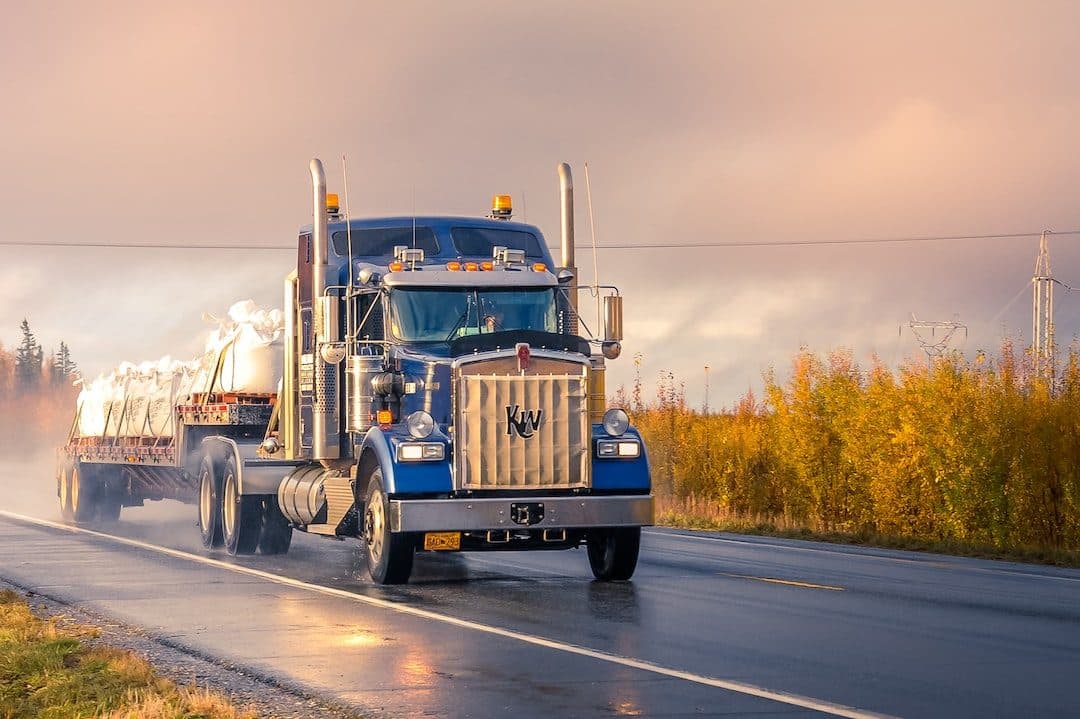
A plumber's van in Everett, a lawn-care crew's pickup and trailer in Kent, a real estate agent's SUV in Bellevue, a box truck delivering restaurant supplies across Seattle: all of them are vehicles used for work, and most of their owners first insured them the way they insure the family car. Commercial auto insurance in Washington is the policy written for that work use, and the difference between the two policies only becomes visible at the worst moment, when a claim comes in and the adjuster asks what the driver was doing at the time of the crash.
This guide walks through that difference the way an agent would across the desk: when a work vehicle has outgrown a personal policy, what a commercial policy actually pays for, how much coverage a small business really needs, and the extra rules that apply once you run trucks, move households, register as a contractor or drive for an app. Where a rule comes from state or federal law, the official page is linked so you can read it yourself.
Does your business need commercial auto insurance in Washington?
Every vehicle registered in Washington has to carry liability insurance, whether it belongs to a family or a company. The state's mandatory insurance law makes no exception for work trucks and sets no weight limit, so a one-ton flatbed is held to the same rule as a commuter sedan. The minimum coverage is $25,000 for one injured person, $50,000 for everyone injured in one accident and $10,000 for the other party's property. For a business the question is not whether the truck needs insurance. It is which policy will actually pay when something goes wrong.
Here is the test most insurers apply. If the vehicle is titled to your LLC or corporation, it belongs on a commercial policy; the Insurance Information Institute's small-business guide says flatly that a business-owned vehicle has no coverage under a personal auto policy. If the vehicle is in your own name but spends most of its miles on the job, the same guide says there is likely no personal coverage either. Beyond ownership, look at how the vehicle is used. If employees drive it, even once in a while, it needs a commercial policy. If it carries tools, materials or goods for the job, or has ladder racks, a lift gate, a wrapped exterior or mounted equipment, it needs one. If it tows a work trailer, if a general contractor or property manager has asked you for a certificate of insurance, or if you get paid to move freight, furniture, food, packages or people, the answer is the same.
What falls on the other side of that line? A sales manager who drives her own sedan to the office and occasionally to a client lunch is usually fine on a personal policy, often with a business-use class added. A handyman who runs a few jobs a month out of the family minivan is already in the gray zone, and the honest move is to describe the use to an agent and let the carrier decide in writing rather than find out at a claim.
Why a personal auto policy stops working at the job site
Personal auto policies are priced for commuting, errands and family trips, and the fine print says so. Washington's Office of the Insurance Commissioner warns gig workers that most personal auto policies sold in Washington do not cover losses that happen during paid gig work, that many policies spell that exclusion out, and that a separate business policy may be needed. The same page notes that a personal policy still covers unpaid volunteer work and everyday personal driving. Paid work is simply a different risk, and insurers draw the line there.
For a business owner the consequences show up in two ways. The first is the denied claim everyone fears: a pickup loaded with tools rear-ends a car on I-405 between job sites, the insurer learns the driver was working, and the business-use exclusion applies to the injuries, the other car and your own truck. The second is quieter and more common. The insurer discovers at renewal, or while handling a small claim, that the vehicle is really a work truck. The policy is cancelled or not renewed, and the next carrier prices that gap in coverage against you for years.
What a commercial auto policy covers
A business auto policy is built from the same parts as a personal one, written for a business and its drivers:
- Liability pays for injuries and property damage your drivers cause to others, plus legal defense. Limits are usually one combined number for everything in an accident rather than the split limits personal policies use.
- Collision and comprehensive repair or replace your own vehicles after a crash, theft, fire, vandalism, broken glass or a storm. Lenders and lessors require them.
- Personal injury protection and underinsured motorist coverage pay medical bills for your driver and passengers, and step in when the other driver has too little insurance. Washington requires insurers to offer both on every auto policy, and you can turn them down only in writing (PIP rule, underinsured motorist rule). For a business, this is what protects an injured employee when the driver who hit them carries only the state minimum.
- Hired and non-owned auto covers the business when employees drive their own cars for work or when you rent or borrow a vehicle. More on this below.
- Medical payments, towing and rental reimbursement round it out. Rental reimbursement matters more for a business than for a family: a van in the shop for a week is a week of cancelled appointments.
Two things a commercial auto policy does not cover deserve a sentence each. The tools, materials and equipment inside the vehicle are not covered by the auto policy; they belong on an inland marine or contractor's equipment policy. And the freight you haul for other people needs motor truck cargo coverage, a separate policy with its own limits.
Limits: the state minimum versus what a business should carry
The state floor is $25,000 per person, $50,000 per accident and $10,000 property damage. For a business that floor is almost never enough. One injury claim involving a work truck can pass $25,000 in medical bills alone, and $10,000 does not cover the repair of one late-model SUV. Lawsuits against a business also name the business, not just the driver, so the policy limit is what stands between the claim and the company's assets.
Contracts set the practical minimum. General contractors, commercial landlords, property managers and public agencies routinely require subcontractors and vendors to carry auto liability of $1,000,000 per accident and to name them as an additional insured on a certificate. If your business signs those contracts, the auto limit has to match before the first invoice. A commercial umbrella policy is the usual way to reach higher requirements without rewriting every underlying policy.
Trucks, trailers and the federal rules
If you run anything heavier than a pickup, two more rulebooks apply on top of the state insurance law: the federal motor carrier rules and Washington's own carrier rules. The weight line is lower than most owners expect. Federal rules treat a vehicle as a commercial motor vehicle once it is used across state lines with a weight rating of 10,001 pounds or more, counting the trailer. A three-quarter-ton pickup towing an equipment trailer can cross that line without looking like a truck. Vans built to carry more than eight paying passengers, buses for more than fifteen people, and any vehicle hauling placarded hazardous materials are commercial motor vehicles at any weight.
For a business that hauls other people's goods across state lines, the Federal Motor Carrier Safety Administration sets minimum liability limits:
- $750,000 for ordinary freight in vehicles rated 10,001 pounds or more.
- $1,000,000 for oil and certain hazardous materials.
- $5,000,000 for the most dangerous hazardous materials.
- A small for-hire freight business that runs only vehicles under 10,001 pounds files at $300,000 when it applies for operating authority.
Those are the legal floors, not what the market expects. Most shippers and freight brokers ask for $1,000,000 whatever the vehicle weighs.
Washington adds its own layer for carriers that never leave the state. Under state law, a business operating commercial vehicles rated 16,001 pounds or more inside Washington must get a U.S. Department of Transportation number and display it on the truck; the Washington State Patrol explains the rule, including truck-and-trailer combinations that reach 16,001 pounds together. Household goods movers hold a permit from the state Utilities and Transportation Commission and must carry at least $300,000 in liability for trucks rated 10,000 pounds or less and $750,000 for heavier trucks, with a Form E certificate of insurance filed with the commission. If any of this applies to you, the insurance filing is part of your permit, and the agent quoting your policy needs your carrier numbers before anything else.
Contractors: what Labor & Industries requires and what it does not
Registering as a contractor in Washington comes with two financial requirements from the Department of Labor & Industries: a surety bond and general liability insurance. The department's registration page lists a $30,000 bond for general contractors and $15,000 for specialty contractors, amounts that took effect July 1, 2024 under the bond statute. It also lists liability insurance of $200,000 public liability and $50,000 property damage, or $250,000 combined single limit.
Notice what is missing: neither the statute nor the department's page says a word about vehicles. Contractor registration does not require commercial auto insurance, which is why many newly registered contractors leave the work truck on a personal policy. Two facts close that gap. The truck is still a registered vehicle under the state's mandatory insurance law, so it must carry at least the 25/50/10 minimum on some policy. And the general liability policy that registration does require excludes automobiles, so a crash on the way to a job is not a liability claim; it lands on whatever auto policy exists, and a personal policy with a business-use exclusion is the worst place for it to land. General contractors who hire you will usually ask for a certificate showing commercial auto liability, often at $1,000,000, next to the general liability you already carry.
Rideshare, food delivery and other gig driving
Washington treats passenger rideshare separately from everything else. The transportation network company statute sets the insurance that must be in force while a driver is logged into an app such as Uber or Lyft:
- Before a ride is accepted: liability of at least $50,000 per person and $100,000 per accident for bodily injury and $30,000 for property damage, plus the personal injury protection and underinsured motorist coverage the general statutes call for.
- During a prearranged ride: a $1,000,000 combined single limit, and underinsured motorist coverage of $100,000 per person and $300,000 per accident from the moment a passenger gets in until they get out.
The same statute lets personal auto insurers exclude coverage while the driver is logged in, which is what most of them do. A rideshare endorsement from a carrier that offers one closes the gap between the personal policy and the company's.
Delivery is the trap. The rideshare law's definitions are written around passengers and prearranged rides; food, packages and freight are not mentioned, so a DoorDash or courier shift is not protected by that statute at all. The Insurance Commissioner's guidance quoted above names food delivery as the kind of gig work personal policies exclude. A driver who delivers a few evenings a week usually needs a delivery or business-use endorsement. Someone running a courier or catering operation with a dedicated van needs a commercial auto policy, with limits set by the platforms and customers they serve.
Hired and non-owned auto: employees driving their own cars
Many small businesses own no vehicles and still have auto exposure: an office manager who runs to the bank, a sales rep who visits clients in her own car, a crew member who drives his personal truck to a site. If that employee causes a serious crash while working, the injured party can sue the employer. Hired and non-owned auto coverage, described in the Insurance Information Institute's guide, protects the business in that situation and applies above the limits of the employee's own personal policy. It also covers vehicles the business rents or borrows. For a consulting firm, a clinic or a small retailer it is often the only auto coverage needed, and it costs little next to a policy on owned vehicles.
What drives the price of commercial auto insurance in Washington
No published average tells you what your business will pay, because the rating factors are specific to the operation:
- Vehicle type and weight. A compact service van, a one-ton flatbed and a 26,000-pound box truck sit in different rating classes.
- Radius and use. Local work within about fifty miles is priced differently from intermediate and long-haul radius, and service use, retail delivery and commercial hauling each have their own class.
- Garaging location. Insurers rate by ZIP code; a fleet parked overnight in Seattle's SoDo district is priced differently from one in Yakima or Spokane.
- Drivers. Every listed driver's motor vehicle record counts, and one driver with a recent DUI or a pattern of violations moves the whole policy.
- Limits and deductibles. A $1,000,000 limit required by your contracts costs more than the state minimum; higher physical damage deductibles bring the premium down.
- Years in business, loss history and fleet size. Three clean years of loss runs is the single most persuasive document a growing company can bring to a quote.
Because these factors interact, the same van and driver can get very different prices from different companies. Quoting several carriers side by side for identical coverage is the only reliable way to find out, and it is why an independent agency exists.
What to have ready when you ask for a quote
- The legal name and structure of the business, and how long it has operated.
- Year, make, model, VIN and weight rating of each vehicle and trailer, and whether each is owned, leased or financed.
- Each driver's license number and date of birth, plus where the vehicles are garaged, how far they travel and what they carry.
- The insurance requirements from your contracts, and your USDOT or UTC permit numbers if you have them.
- Your current declarations page and loss runs for the last three to five years.
Where to read more on this site
Commercial auto is one line of a business program and works best when the other lines fit it. The commercial insurance page for Seattle businesses covers general liability, workers' compensation, bonds and commercial auto together; contractors will find the bond and liability rules on the contractors insurance page, and the commercial insurance overview explains business owner's policies and umbrellas. If the vehicle really is personal and only occasionally used for work, the auto insurance page covers business-use endorsements. Businesses in Snohomish County can start from the Everett insurance page.
Get a commercial auto quote
As an independent agency, Absolute Insurance Solutions quotes commercial auto with several carriers at once, matches limits to the certificates your customers require, and issues those certificates the same day. Call (425) 610-6909 or request a quote online and an agent will call you back. The office is at 733 7th Ave, Suite 204 in Kirkland, open every day from 9 AM to 6 PM, and most business clients across Washington work with us entirely by phone and email.
This article explains Washington and federal rules in general terms and is not legal advice. Statutes and agency requirements change; the linked official pages are the authoritative source.